Loading...
Serving Oxnard, CA and surrounding areas. (805) 261-5982
SlateCrew Oxnard Concrete serves Moorpark homeowners with driveways, garage floors, retaining walls, and concrete patios - with base prep matched to the city's clay soils, permitted work through the City of Moorpark, and a crew that has worked on the 1990s tract homes and hillside properties that define the city.
SlateCrew Oxnard Concrete serves Moorpark homeowners with driveways, garage floors, retaining walls, and concrete patios - with base prep matched to the city's clay soils, permitted work through the City of Moorpark, and a crew that has worked on the 1990s tract homes and hillside properties that define the city.
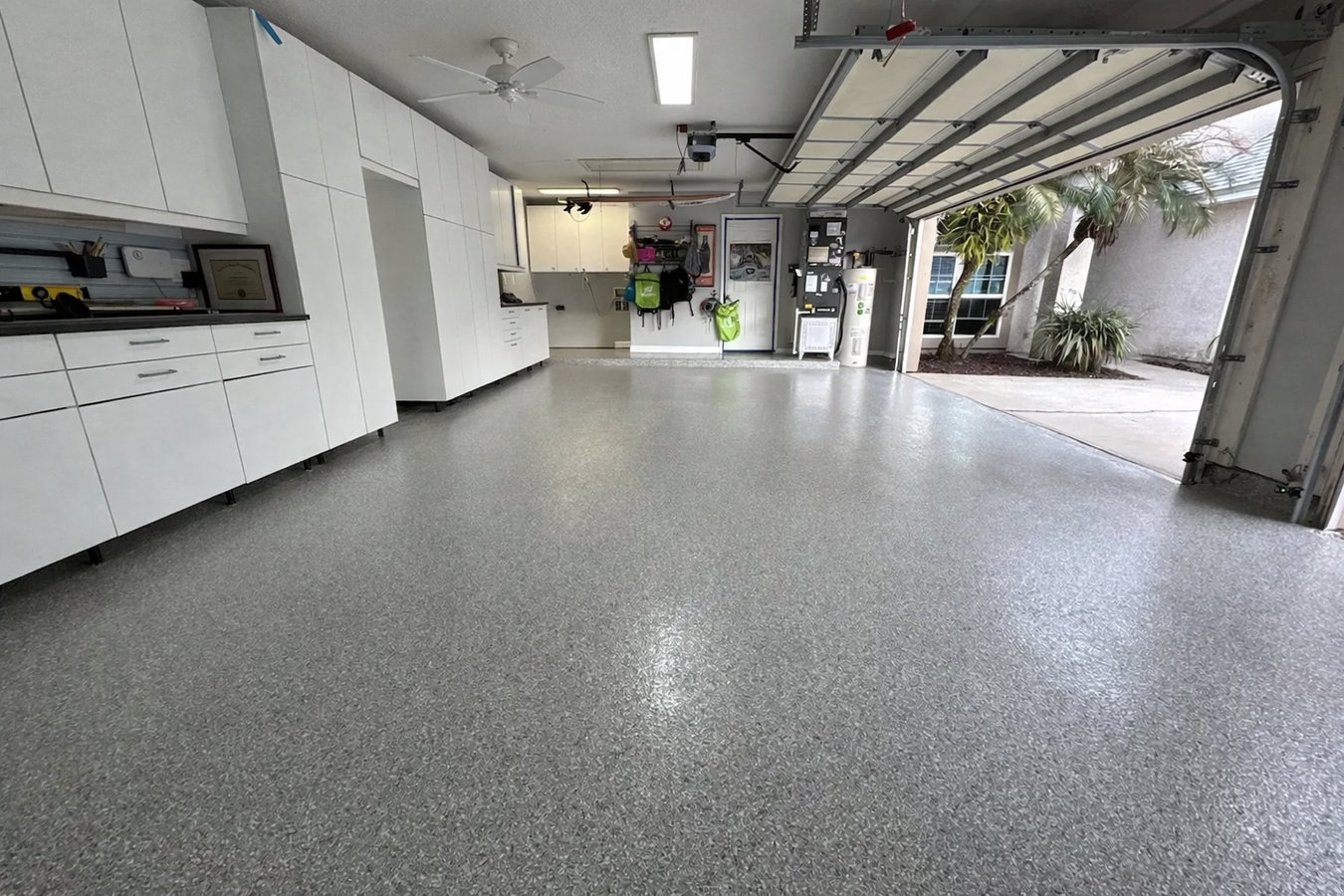
Most of Moorpark's homes were built during the 1990s, and their original garage floor slabs are now reaching the age where clay-soil movement and surface wear combine to produce cracking and surface spalling that patching will not fix. Our garage floor concrete work includes full demolition of the failed slab, proper base compaction, and a replacement pour with correct control joint placement to handle Moorpark's seasonal soil movement.
Moorpark's 1990s tract homes were built on a mix of flat valley lots and graded hillside pads, and their driveways reflect that variety - some are straightforward flat replacements, others involve slopes, retaining tie-ins, or shared driveway aprons that require more careful drainage planning. At 25 to 35 years old, many of these original driveways are cracking along clay-soil fault lines and need full replacement rather than surface repair.
Moorpark's hillside neighborhoods - particularly those built on the edges of the valley where lots were graded up into the slopes - have a high concentration of retaining walls holding back soil on stepped backyards and side yards. As these walls approach 25 to 30 years old, the ones built without adequate drainage behind them are starting to bow or crack. We build new retaining walls with proper weep holes, gravel backfill, and footing depth matched to the soil load.
Moorpark's dry summers and mild winters give homeowners a long outdoor season, and the single-family homes throughout the city typically have generous backyards sized for real outdoor living. An aging or cracked original patio slab that no longer drains correctly is the most common reason Moorpark homeowners call us - we build replacements that handle Moorpark's clay soil movement and move water away from the house.
Moorpark's owner-occupied, higher-value homes are a natural fit for stamped concrete upgrades on driveways and backyard patios. The city's predominantly stucco-exterior tract homes pair well with flagstone and large-format tile patterns that add curb appeal without clashing with the neighborhood aesthetic. Stamped concrete costs more than plain flatwork upfront but adds visible value in a market where homeowners invest in their properties long-term.
Moorpark's planned communities were designed with sidewalk networks throughout, and clay-soil movement and tree root activity regularly push panels out of alignment on streets across the city. Cracked or heaved sidewalk panels are a tripping hazard and a liability issue for homeowners adjacent to the affected section. We replace panels to City of Moorpark grade standards, matching the existing texture for a clean result.
Moorpark is a city that grew almost entirely between 1985 and 2005, which means the vast majority of its housing stock is now 20 to 40 years old. That age range is significant for concrete: the driveways, garage floors, patio slabs, and retaining walls that were poured during the city's fast-growth era are reaching the end of their design life at the same time. Much of the original concrete flatwork in Moorpark was built to the minimum standard required to pass inspection - adequate at the time, but not necessarily prepared for decades of movement in Ventura County's clay-heavy soils. As these slabs age, they are failing in patterns that are predictable once you understand what the soil underneath them has been doing season after season.
The hillside terrain that defines a significant portion of Moorpark's neighborhoods adds complexity that flat-lot cities in Southern California do not share. Sloped lots require retaining walls, graded pads, and drainage systems that direct water away from both the house and adjacent properties. When those drainage systems were sized or built inadequately during original construction, the problems compound over time - soil behind retaining walls becomes saturated, concrete pads on graded lots shift, and driveways with insufficient slope send water toward foundations instead of the street. Understanding how water moves on a specific Moorpark hillside lot is a prerequisite to doing the concrete work correctly, not an afterthought.
We pull permits through the City of Moorpark's Building and Safety Division and are familiar with the permit review process for both standard residential flatwork and the retaining wall projects that come up regularly on hillside lots. Moorpark's retaining wall permit requirements include height thresholds above which an engineering review is required before a permit is issued - a step that catches contractors who submit without the right documentation and delays projects by weeks.
Working in Moorpark means knowing the difference between the neighborhoods. Homes in the flatter central valley areas near Moorpark College and the city's older commercial corridor are more straightforward flatwork jobs with standard access. The hillside developments to the north and east - built on graded pads with stepped backyards and shared retaining wall systems - require more site evaluation before any work begins. Knowing which neighborhoods sit on which soil profiles, and which drainage directions actually hold water during a heavy rain, changes how a job gets designed from the estimate stage forward.
Moorpark sits in the middle of a cluster of Ventura County communities we serve on a regular basis. We also work throughout neighboring Camarillo, just to the south and west, where a similar era of tract home construction creates comparable concrete maintenance needs. Crews travel between Moorpark and Camarillo throughout the work season with no gap in scheduling.
Reach us by phone or through the contact form. We respond within one business day and can typically schedule a site visit the same week - Moorpark is a regular part of our eastern Ventura County service rotation.
We visit the property, assess the existing concrete, evaluate soil conditions and drainage - particularly on hillside lots - and measure the full scope of work. You receive a written, itemized quote at no cost and no obligation. Permit requirements, HOA submission needs, and any engineering review items are identified here so you understand the full timeline before committing.
We pull the permit through the City of Moorpark, coordinate required inspections, and complete all demolition, excavation, base compaction, forming, and concrete work. Most residential flatwork jobs in Moorpark run one to three days of active construction on-site.
We leave the site clean and walk you through the curing schedule - seven days minimum before vehicles use the surface. You get a clear timeline and care instructions so you know exactly when the project is done and what comes next.
We serve all of Moorpark - from the flat valley-floor neighborhoods near Moorpark College to the hillside tracts on the edges of the city. No pressure, no obligation. Just a straight quote for your project.
(805) 261-5982Moorpark is a city of about 36,000 people in eastern Ventura County, sitting in a valley ringed by hills and mountains. The city was a small farming community until the 1980s, when rapid residential development transformed it into one of the county's growing suburban cities. Most of Moorpark's housing was built between 1985 and 2005 - single-family detached homes on moderate to generous lots, almost universally finished in stucco, and laid out in the planned community patterns typical of Southern California suburbs from that era. Moorpark College is one of the city's most recognized institutions, well known across Ventura County and notable for its exotic animal program. The city's high rate of owner occupancy and above-average household incomes reflect a community where homeowners have real equity in their properties and tend to invest in maintaining them.
The hillside neighborhoods built along the edges of Moorpark's valley are distinct from the flat central neighborhoods - they have stepped lots, retaining wall systems, and drainage conditions that require different concrete approaches. Underwood Family Farms on the city's western side is a local landmark that most Moorpark residents know well, and it marks the transition into the more rural and agricultural land that surrounds the developed city. With median home values well above $700,000, homeowners here take concrete maintenance seriously - a failed driveway or bowing retaining wall on a property worth that much is not something to defer. We also regularly serve homeowners in neighboring Thousand Oaks, Moorpark's larger neighbor to the south that shares the same era of residential construction and similar hillside property challenges.
SlateCrew builds driveways, garage floors, patios, retaining walls, and concrete flatwork for Moorpark homeowners - with permitted work, drainage-aware design for hillside lots, and base prep matched to Ventura County's clay soils. Call now or send a message and we will respond within one business day.