
Loading...
Serving Oxnard, CA and surrounding areas. (805) 261-5982
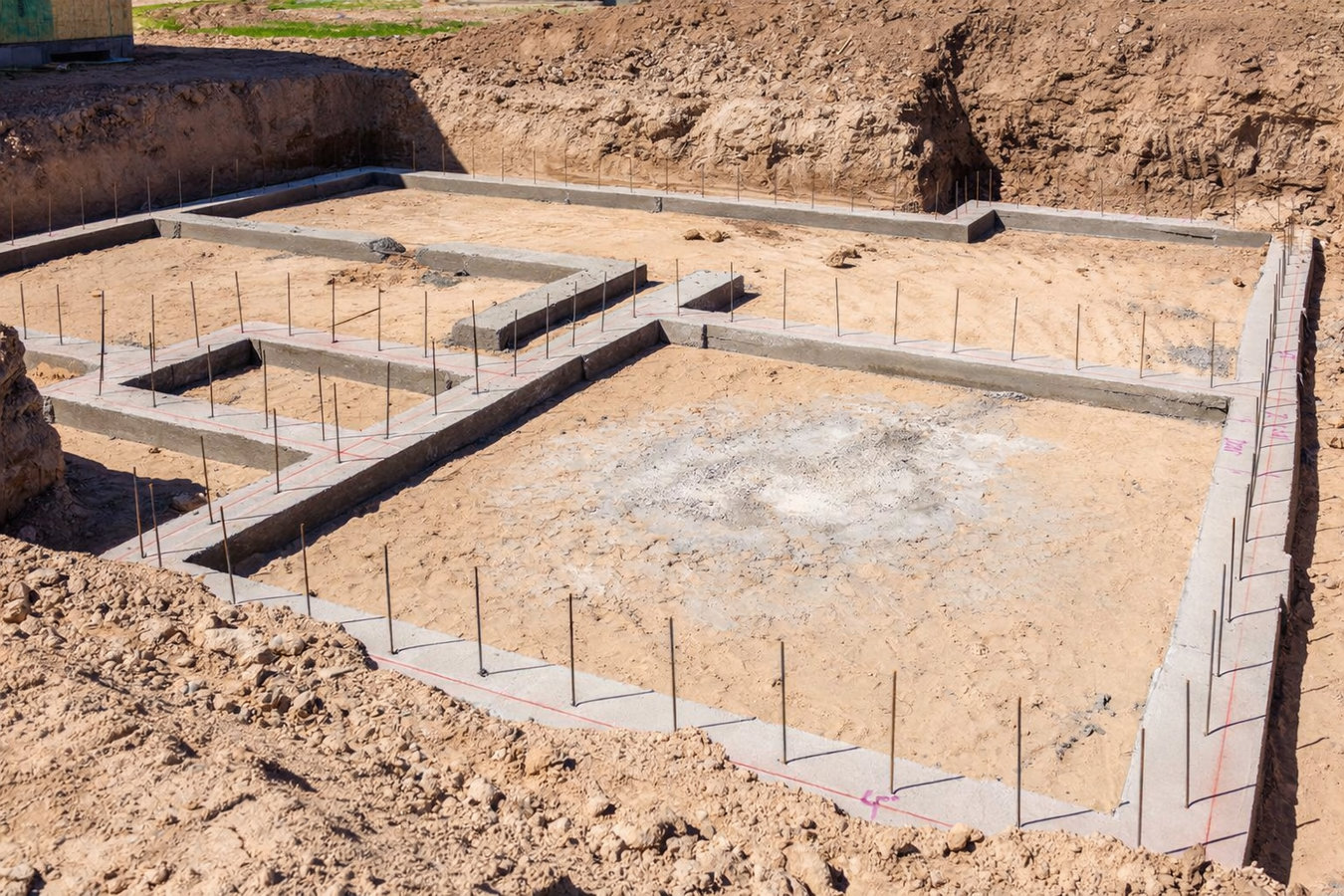
Oxnard's clay soils and earthquake zone requirements make foundation work more demanding than in most cities. We handle new installations and replacements with full permit management, soils coordination, and work built to California's current seismic standards.
Foundation installation in Oxnard, CA covers excavation, site grading, steel reinforcement placement, city permit coordination, and a concrete pour that creates the base your entire home rests on - most standard residential projects move from permit approval to framing-ready in one to three weeks of active work.
Your foundation is the one part of your home you cannot see once it is finished, and the one that affects everything above it. Foundation installation in Oxnard is more involved than in many areas because of the city's clay-heavy soils, coastal moisture exposure, and strict California seismic requirements. Older neighborhoods near downtown Oxnard have homes built in the 1940s through 1960s on foundations that predate today's earthquake standards - homeowners in those neighborhoods often face the question of replacement or reinforcement. Newer construction still requires careful site engineering to account for soil movement.
When your project involves a straightforward flat slab, our slab foundation building service is a focused option. For the structural elements that anchor walls and posts below grade, our concrete parking lot building work shares many of the same sub-base engineering principles for larger poured surfaces. The American Concrete Institute sets the national standards for residential concrete foundation construction.
If you see cracks in your drywall or plaster that angle outward from the corners of doors or windows, that is often a sign the foundation beneath that section of the house has shifted or settled unevenly. In Oxnard, where clay soils expand and contract with seasonal moisture changes, this kind of movement is more common than in areas with stable sandy soil. Cracks wider than a quarter inch or cracks that grow over time deserve a professional assessment.
When a foundation moves, the frame of the house moves with it, and doors and windows are usually the first place you notice. A door that suddenly drags on the floor or a window that requires force to open may signal the house is racking slightly out of square. This is especially worth watching in older Oxnard homes built before current seismic standards.
Stand in a room and look at where walls meet the floor and ceiling. Gaps that were not there before, or that seem to be growing, suggest the structure is moving in ways it should not. In homes near the Oxnard coast, repeated moisture exposure can accelerate deterioration of older foundation materials, making this kind of movement more likely over time.
If your home has a raised foundation with a crawl space underneath, check inside with a flashlight. Standing water, white powdery deposits on the concrete (called efflorescence), or a persistent musty smell are all signs that moisture is getting in and potentially weakening the foundation. Oxnard's coastal humidity makes this a real concern for homes with older raised foundations.
We handle both slab-on-grade foundations and raised foundations with crawl spaces, depending on your home's design and site conditions. New installation projects follow the full sequence from excavation to city inspection. Replacement projects on older Oxnard homes - particularly those built in the 1940s through 1960s on unreinforced footings - require additional steps: temporarily supporting the structure, demolishing the existing base, and pouring a new foundation to current seismic and soil standards. That kind of project involves engineering review and multiple city inspections, and we coordinate all of it.
For projects where a new slab is the primary scope, we also offer our dedicated slab foundation building service, which is a focused option for ADUs, room additions, and new homes on cleared lots. When a foundation project connects to commercial or mixed-use surfaces, our concrete parking lot building experience applies the same sub-base engineering principles at a larger scale.
Suits new construction on vacant lots or cleared sites - the most common foundation type in modern Oxnard homes.
Ideal for older architectural styles or sites where below-slab access is needed - more common in pre-1970s Oxnard neighborhoods.
For homes with deteriorating or pre-code foundations - the structure is supported while the old base is removed and a new one is poured.
Covers new foundation work for backyard ADUs and room additions where the footprint extends beyond the existing slab.
We work alongside licensed geotechnical engineers when a soils report is required, so the design matches what is actually underground.
Oxnard presents a combination of conditions that make foundation work more technically demanding than in many Southern California cities. The Oxnard Plain's clay-rich alluvial soils swell when saturated and shrink in dry months - that movement is the leading cause of foundation cracking in this area. A soils report is commonly required before the city issues a permit here, and the results shape how deep the footings need to go and what sub-base preparation is needed underneath the slab. On top of that, Ventura County sits in a designated seismic hazard zone due to its proximity to active fault systems. California's building code requires specific rebar patterns and anchor bolt placement in every new foundation here - requirements that are stricter than most of the country and that a city inspector verifies before the concrete is poured.
We serve Oxnard and neighboring communities including Fillmore and Moorpark. Oxnard's older housing stock - many homes built in the 1940s through 1960s on raised wood foundations or unreinforced footings - means replacement and reinforcement projects are a regular part of the work here. Salt air from the Pacific adds a coastal dimension that affects material choices, specifically the thickness of concrete cover over rebar and the type of mix used to prevent corrosion over the life of the foundation.
We respond within 1 business day to schedule a free visit to your property. We look at the site, review any existing plans or surveys you have, and assess soil and access conditions before quoting anything. Your estimate breaks down labor, materials, permit fees, and any engineering costs - no line items added after you sign.
Before any digging starts, we pull a building permit from the City of Oxnard and, in most cases, coordinate plans reviewed by a licensed structural engineer. This step takes one to three weeks depending on the city's current workload. We handle this process - you do not have to chase the permit yourself.
Once the permit is approved, the crew marks utility lines, excavates the site, and builds the formwork that defines the foundation's shape. Steel reinforcing bars are then placed inside according to the engineered plans. Expect heavy equipment, noise, and some disruption to your yard or driveway during this phase.
A city inspector visits to verify the rebar placement before any concrete is poured - this is a required step in Oxnard. Once the inspection passes, the pour happens in a single day. The concrete cures for at least seven days before it can bear significant weight. We remove the forms, haul away debris, and leave the site ready for the next phase of construction.
We respond within 1 business day. No obligation - just a free, written on-site estimate. Once you submit, someone from our office will call to schedule a site visit, review your project scope, and walk you through costs and timeline before you commit to anything.
(805) 261-5982Foundation work in Oxnard requires a permit, an engineering review in most cases, and a mandatory city inspection before the pour. We handle every step of that process - submitting the permit application, coordinating the inspection, and keeping you informed without you having to call the building department. Your project stays on track and fully documented.
We have worked on foundation replacement projects in Oxnard's older neighborhoods - homes built in the 1940s through 1960s that need their original foundations brought up to current seismic standards. This work involves engineering, careful structural support during demolition, and multiple city inspections. It is more complex than new installation, and we treat it that way.
California's building code requires specific steel reinforcement and anchor bolt patterns in every foundation in this seismic zone. We build to those standards on every project - not the older minimums that some foundations still carry. The city inspector confirms compliance before the concrete is poured, and that documentation protects your home's value and your family's safety.
We work across 12 cities in the region, and the coastal environment of Oxnard is one of the most demanding in our service area. Salt air and humidity affect the concrete mix and the thickness of cover over rebar - details that determine whether your foundation holds up for 50 years or starts showing corrosion-related problems within a decade. Local experience with these conditions is not a minor detail.
Every foundation we install is permitted, inspected, and built to the standards that apply specifically in Oxnard - not a generic approach. Verify our California contractor license on the Contractors State License Board website, and review the California Seismic Safety Commission for information on why seismic standards here are what they are.
Concrete flatwork for commercial and multi-unit properties - applying the same sub-base engineering principles as foundation work at a larger scale.
Learn moreA focused option for new ADU slabs, room addition pads, and new home foundations on cleared lots with straightforward slab-on-grade scope.
Learn morePermit season in Ventura County fills up fast - locking in your project now means your foundation is poured and ready for framing before summer construction demand peaks.